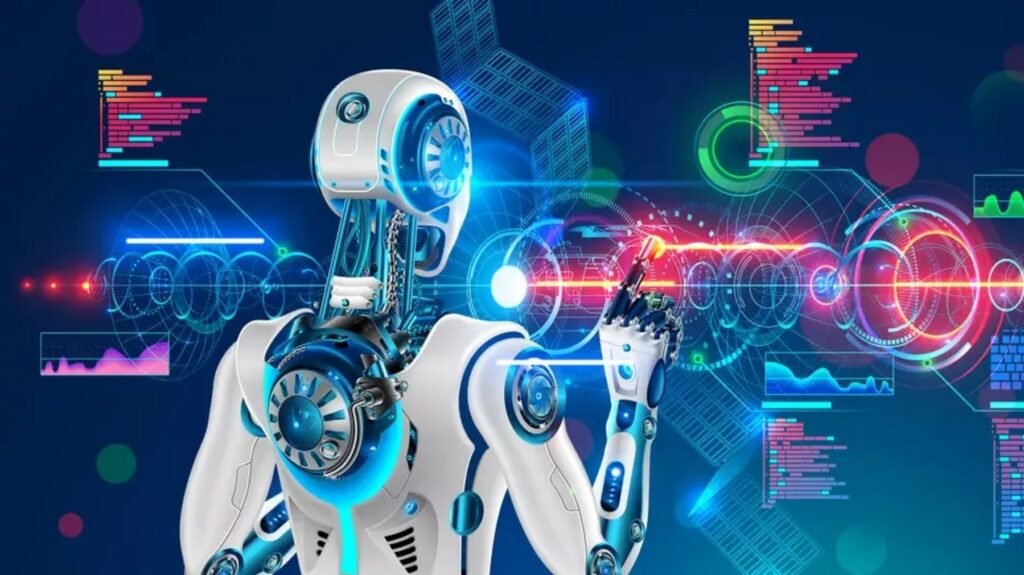
As technology continues to evolve, the role of Artificial Intelligence (AI) in User Interface (UI) design is becoming increasingly significant. AI is transforming how interfaces are designed, making them more intelligent, responsive, and personalized. From predictive analytics to automated design generation, AI is reshaping UI design, creating experiences that adapt to users’ needs in real time.
In this blog, we’ll explore how AI is influencing UI design, the benefits it brings, and the challenges designers must navigate in this rapidly evolving landscape.
Key Ways AI is Transforming UI Design:
1. Adaptive and Personalized Interfaces
AI allows for hyper-personalized user experiences by analyzing user behavior, preferences, and engagement patterns. Platforms like Netflix and Spotify use AI to tailor recommendations based on individual user activity, creating a more intuitive and engaging experience.
🔹 Example: E-commerce websites use AI-powered UI to suggest products based on browsing history and past purchases, making shopping experiences more seamless.
2. AI-Generated UI Elements and Automation
AI is reducing the manual effort in UI design by automating layout generation, color schemes, and typography choices. AI-powered design tools, such as Adobe Sensei and Figma’s AI-driven features, help designers quickly generate UI components based on brand guidelines and user needs.
🔹 Example: AI-assisted tools can analyze content and automatically suggest the best UI layout for mobile and desktop versions, ensuring consistent and responsive design.
3. Conversational and Voice-Enabled UI
AI-driven chatbots and voice user interfaces (VUIs) are making digital experiences more interactive and accessible. Voice assistants like Siri, Google Assistant, and Alexa use AI to understand natural language and provide relevant responses, reducing reliance on traditional text-based navigation.
🔹 Example: Banking apps are integrating AI chatbots to assist customers with transactions, account management, and troubleshooting.
4. Predictive UX and Smart User Flows
AI can analyze vast amounts of data to predict user actions and improve navigation flows. By learning from past user interactions, AI-powered UI can dynamically adjust layouts, button placements, and content positioning to enhance usability and engagement.
🔹 Example: Google’s AI-powered search predictions suggest queries before users finish typing, streamlining the search experience.
5. AI-Driven Accessibility Enhancements
AI is playing a crucial role in making UIs more inclusive. Tools like Microsoft’s AI-powered Accessibility Checker and Google’s Lookout app help improve UI accessibility for users with disabilities by offering voice guidance, alt-text generation, and real-time screen reading features.
🔹 Example: AI-powered accessibility tools can detect poor color contrast and recommend adjustments for visually impaired users.
Benefits of AI in UI Design
✅ Efficiency & Speed: AI-powered automation reduces the time spent on repetitive UI design tasks.
✅ Hyper-Personalization: AI-driven UI adapts to user preferences, creating a more engaging experience.
✅ Data-Driven Decision Making: AI analyzes real-time data to optimize design layouts and interactions.
✅ Improved Accessibility: AI tools make UI more inclusive by assisting users with disabilities.
✅ Predictive User Experience: AI anticipates user needs and streamlines navigation for smoother interactions.
Challenges of AI-Powered UI Design
🚧 Loss of Human Creativity: Over-reliance on AI may lead to generic or formulaic designs, reducing originality.
🚧 Data Privacy & Ethics: AI requires vast amounts of user data, raising privacy concerns and ethical considerations.
🚧 Learning Curve for Designers: Designers need to adapt to AI-driven tools and integrate them into traditional workflows.
🚧 Bias in AI Algorithms: If AI is trained on biased datasets, it may result in exclusionary design practices.
The Future of AI in UI Design
As AI technology advances, UI design will become even more predictive, adaptive, and immersive. Future trends may include:
🔮 AI-powered Augmented Reality (AR) and Virtual Reality (VR) interfaces
🔮 More intuitive and emotion-aware UI that reacts to facial expressions and tone of voice
🔮 Enhanced real-time UI adjustments based on user engagement patterns
The human touch in design will always be crucial, but AI will act as a powerful tool to enhance creativity, efficiency, and user-centric experiences.
Final Thoughts
AI-powered UI design is no longer just a concept—it’s a reality shaping the future of digital experiences. By leveraging AI’s capabilities, designers can create interfaces that are smarter, more adaptive, and highly personalized. However, balancing AI’s efficiency with human creativity remains essential to maintaining a user-centered approach.
As AI continues to evolve, so will UI design, leading to more intelligent, engaging, and accessible digital experiences. Designers who embrace AI will be at the forefront of innovation, crafting the next generation of seamless, intuitive, and user-friendly interfaces.